
Soul Shop for Indigenous Communities
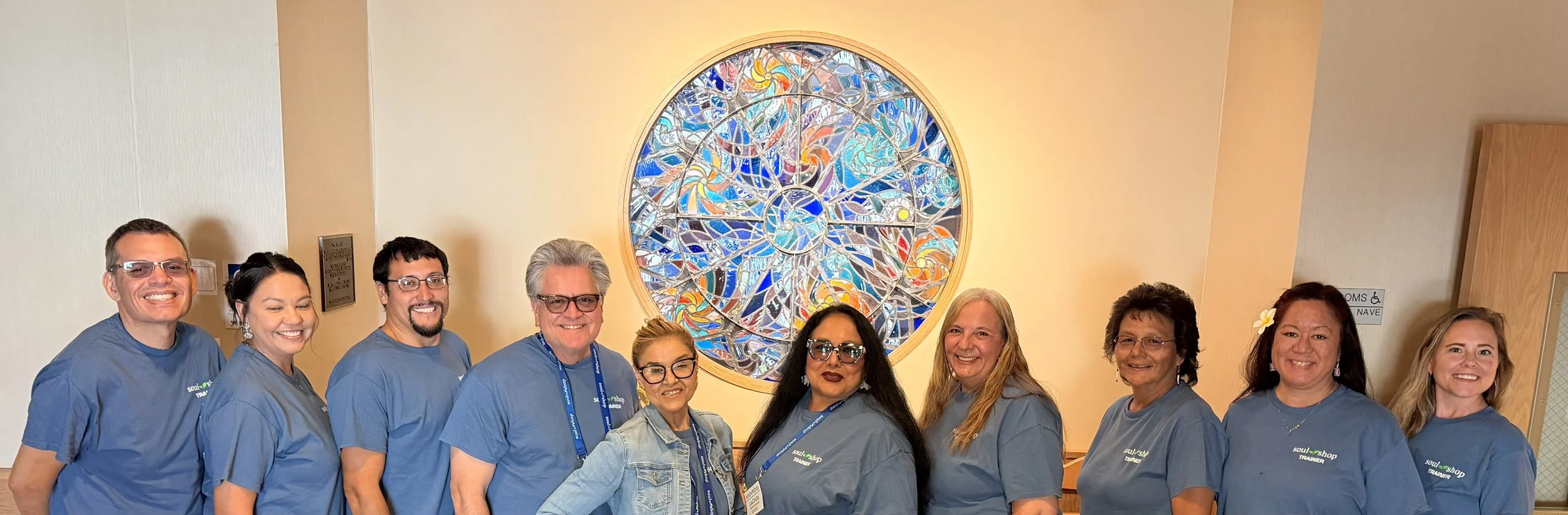
First training for trainers
The Episcopal Church’s Office of Indigenous Ministries and the faith-based nonprofit Soul Shop Movement held the first “train the trainers” program at Calvary Episcopal Cathedral in Sioux Falls, South Dakota, teaching future trainers how to teach suicide prevention workshops for Indigenous communities.
The early October five-day training, which was funded by a United Thank Offering grant, stems from the successful pilot training at the annual Winter Talk conference for Indigenous Episcopalians in February in Albuquerque, New Mexico. Most of the 10 future trainers were Indigenous, representing tribes and groups throughout the continental United States and Hawai‘i.
“Everyone who was there talked about how meaningful this training was, and they all shared how their lives have been touched by suicide in some way, which is such a big problem in Indian country,” the Rev. Shaneequa Brokenleg, the church’s staff officer for racial reconciliation and interim missioner for Indigenous ministry and an enrolled member of the Rosebud Sioux Tribe (Sicangu Nation), told Episcopal News Service.
In the United States, Indigenous people die by suicide at higher rates than any other racial or ethnic group, according to the U.S. Centers for Disease Control and Prevention. Suicide is the second leading cause of death among Indigenous youth ages 8 to 24.
Systemic injustices, attempts by the U.S. government and big businesses to seize sacred Indigenous lands for natural resource extraction, the intergenerational trauma caused by the legacy of Indigenous boarding schools and colonialism, and the high rate of missing and murdered Indigenous people, especially women and girls, are major drivers in the Indigenous communities’ high suicide rates. These issues are increasingly being recognized as acts of literal and cultural genocide.
James White, a member of the Winnebago tribe of Nebraska Ho-Chunk and junior warden at St. Paul’s Indian Mission Episcopal Church in Sioux City, Iowa, told ENS that he registered for the Oct. 5-9 training because suicide is a personal issue for him, and learning about different resources can help people “try and save a life.”
“When I was 17, my best friend died by suicide, and later, in my 20s, I was addicted to drugs and alcohol. Through that time, I had seen suicide, and I myself had suicidal thoughts,” White said. “Now in my sobriety, I feel my call from God to help people, and becoming a trainer for Soul Shop is just another way to answer my call.”
Soul Shop offers in-person suicide prevention workshops nationwide led by trained professionals in partnership with organizations like the Episcopal Parish Network and the American Foundation for Suicide Prevention. The program also offers specialized training for Black and Hispanic churches, youth leaders and more.
For the training, Soul Shop used a new curriculum designed specifically for Indigenous communities in collaboration with Indigenous Ministries and Indigenous leaders representing multiple tribes, including several members of The Episcopal Church’s Truth, Justice and Healing Commission on Native Schools. Like other curricula, the Indigenous curriculum addresses what Soul Shop calls the “seven Cs,” or causes, for suicidal desperation: Sickness, stuck, shunning, systemic situations, stress and shame. The program also gives an overview of suicidal desperation in Scripture, such as Job 7:13-15 and Acts 16:23-34.
“The core messaging reminded me so much of The Episcopal Church in general, which is a really good thing,” Ui Stark, a Kānaka Maoli (Native Hawaiian) lay leader at St. John the Baptist Episcopal Church in Waianae, Oahu, Hawai‘i, told ENS. “What I like about being Episcopalian in particular is that I can go to a church service in the Midwest, in the South, in Hawai‘i, and the bones of it are the same, but every congregation is unique. Soul Shop is the same in that the bones of the message are the same and the principles are the same. That’s why I loved this training.”
The Indigenous curriculum incorporates various Indigenous imagery and symbolism, which vary by tribe and region. One metaphor that spoke to everyone was “life-giving, living water.”
“Looking at suicidal desperation as different things ‘taking water away,’ it might be trauma; it might be job loss; it might be anything, but it’s taking away the water that you need to survive. That’s something everyone could relate to,” Brokenleg said. “There’s not one Indigenous symbol for everybody, but water as being life-giving is a symbol we can all believe.”
Like every other Soul Shop workshop, the Indigenous “train the trainers” program had experienced “lifeguards” who observed trainees throughout the training and checked with anyone showing signs of distress.
“There were some tears at different points in time, but that was to be expected,” Brokenleg said. “But I think what I really saw from people was, while there’s pain in that our lives have been touched by suicide, there’s also a lot of hope. … And that’s one of the key pieces of this curriculum, that there’s a sharing of hope like there’s a sharing of peace at church.”
The Rev. Bradley Hauff, a Lakota and a member of the Oglala Sioux Tribe, is an endowed professor of Indigenous congregational studies with the Indigenous Theological Circle at Bexley Seabury Seminary and The Episcopal Church’s former Indigenous Ministries missioner. As a priest, he believes Episcopalians can help prevent suicide, “but we have to find ways to be able to do it and engage with those who are contemplating suicide or have thoughts of suicidal ideation or despair.”
“[Soul Shop] identified two significant causes or contributors to suicidal ideation, or suicidal despair: loss of hope and loss of social connections. The church can certainly provide both,” Hauff told ENS. “Church programming and clergy and pastoral visitors reaching out to people so that nobody’s alone, keeping track of our members and those who visited the congregation and newcomers … the church has been doing that all along, but we can do better. It would be a blessing if people who don’t go to church could at least identify the church as a source of help for people who are feeling no hope and no social connection.”
Hauff, Stark and White all completed the Soul Shop training with plans on how to incorporate suicide prevention training into their ministries. In the 2027 spring semester, for example, Hauff plans to include a suicide prevention unit in his course on pastoral care in Indigenous communities. Stark has discussed hosting Soul Shop trainings as official diocesan events with Hawai‘i bishop-elect Elizabeth Berman, whose consecration will take place next month. White said he plans to teach Soul Shop workshops in the Diocese of Iowa and share what he’s learned throughout the Winnebago Reservation.
“Suicide prevention isn’t a one-size-fits-all,” White said. “This training will help you figure out the resources … to pass along to someone affected by suicide.”
Anyone struggling with suicidal thoughts or emotional distress can call the 24-hour Suicide & Crisis Lifeline toll-free at 9-8-8 to receive local mental health assistance, or they can text 435748 for support and resource information. Health insurance isn’t required. The Episcopal Church’s Department of Faith Formation also offers a list of mental health and suicide prevention resources on its website. This includes free online intervention training through LivingWorks, creator of safeTalk, an evidence-based training program that teaches participants how to identify the warning signs of someone contemplating suicide and how to prevent it.
-Shireen Korkzan is a reporter and assistant editor for Episcopal News Service. She can be reached at skorkzan@episcopalchurch.org.